Ladakh · The Subcontinent
Darshan · Ladakh
The highest sojourn. Into the Tibetan Buddhist contemplative tradition as it has been practiced in the Ladakhi monasteries for seven centuries. Present, not touring.
Ladakh · The Subcontinent
The highest sojourn. Into the Tibetan Buddhist contemplative tradition as it has been practiced in the Ladakhi monasteries for seven centuries. Present, not touring.
Ladakh receives tens of thousands of visitors each summer. Most come to see the monasteries. They arrive on tourist buses, photograph the courtyards, buy souvenirs in the shops outside the gate, and leave. The monasteries endure this. They do not open for it.
The Darshan sojourn exists because the monasteries do, sometimes, open, to people who have been properly introduced, who have shown a genuine interest in the practice rather than the spectacle, and who arrive understanding that they are guests in a living tradition rather than visitors to a heritage site. The Custodian has spent years building the relationships that make this possible. This sojourn is their expression.
The Tibetan Buddhist tradition in Ladakh is alive and at work. The monasteries, Hemis, Thiksey, Diskit, Alchi and others, are active religious communities. The monks follow daily liturgical cycles that have not changed in centuries. The masked chham dances performed during the summer festivals are not staged for tourists; they continue a ritual the monastery performs as part of its ongoing practice.
The access the Custodian arranges is specific: time with senior monks who have undertaken extended meditation retreats and are willing to discuss their practice; access to the liturgical cycles at hours when tourist groups are not present; visits to the scriptoria where manuscripts are still copied and illuminated; and in certain cases, presence at the preparation and performance of ritual practices that are not open to the general public.
The monastic textile tradition, thangka painting, embroidery, the making of ritual objects, is a secondary lineage accessed through this sojourn, with practitioners connected to but distinct from the monastic communities themselves.
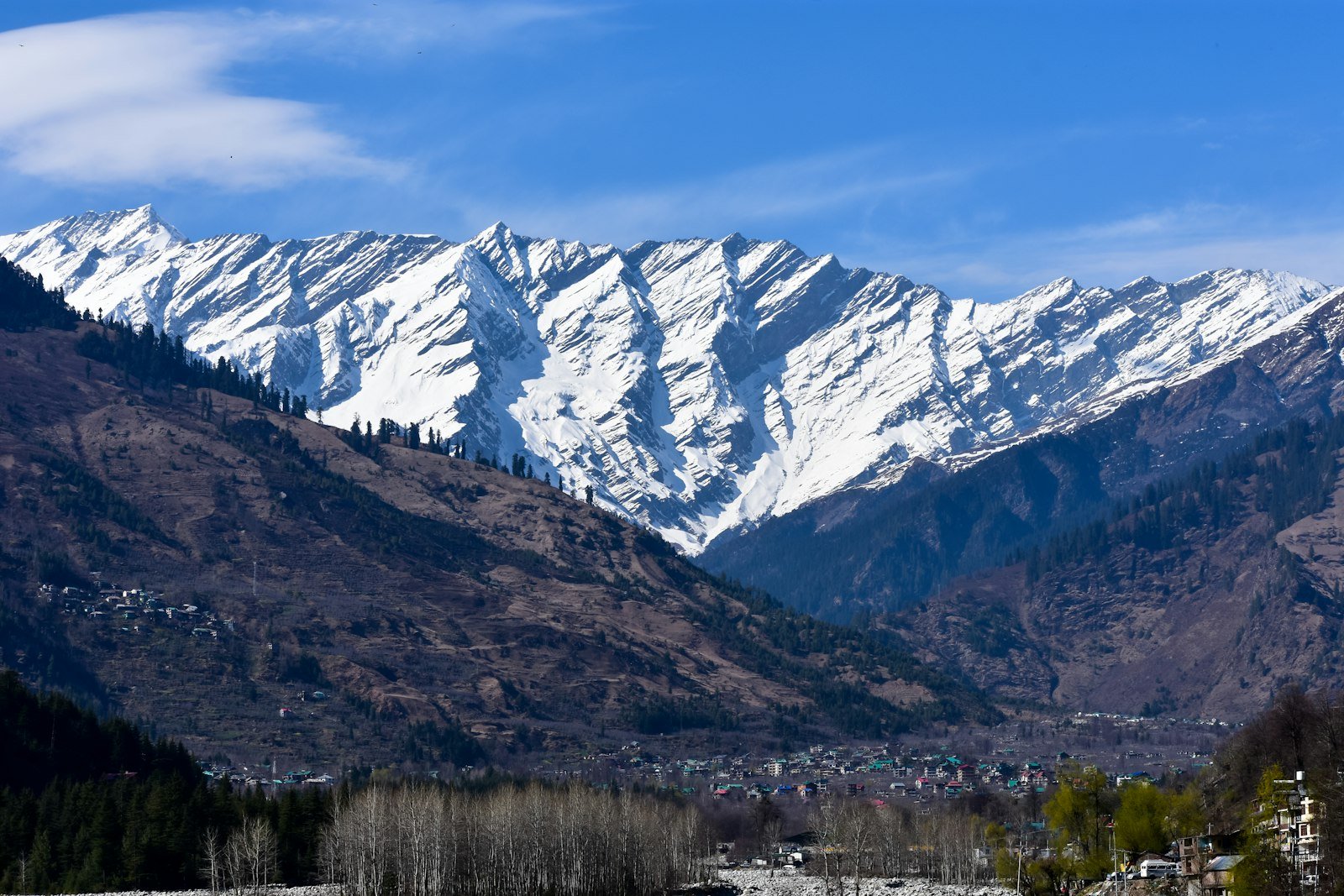
Ladakh is a high-altitude cold desert. At Leh, the capital, the elevation is 3,500 metres; the monasteries in the Nubra Valley and the Zanskar reaches are higher. The landscape is exceptional: the colours, the silence, the quality of light at altitude. None of this is incidental to the sojourn. It is part of the condition the tradition developed in response to.
Acclimatisation is necessary. The sojourn builds in two to three days of slow arrival before any substantive access. This is not an inconvenience. It is how the place asks to be entered.
The Ladakh sojourn is offered at the Darshan register. The guest is present at practices and in conversations that are not available to general visitors, but they are not participants in the monastic life. They are honoured guests, received, observed, and allowed to observe, within limits the monasteries define. The Custodian works within these limits, not around them.
What this means practically: no photography inside the prayer halls. No disruption of liturgical cycles for the convenience of the visitor. No requests that the monks perform or explain their practice in ways that remove it from its context. The guest receives what the tradition offers. They do not extract what they want from it. Group size: four guests maximum.
Ladakh is accessible by road from June through October; the passes close in winter. The monastery calendar concentrates its major festivals in the summer months, the Hemis Festival in June or July, the Thiksey festival in late October. The sojourn does not chase festivals; it orients around the availability of the practitioners and the rhythm of the monastic year, which is richer and more varied than the festival calendar suggests.
The summer months, July and August, offer the most consistent access and the most settled weather. The light in Ladakh in summer, at altitude, is unlike anything at lower elevations: sharp, clean, and at dawn and dusk, extraordinary.
The days are governed by the monastic timetable, not by a tourist schedule. The earliest practices begin at four or five in the morning. The guest does not need to attend these; access is arranged for appropriate times. The mornings, however, have a different quality in a monastery than in a hotel, the bells, the chanting, the smell of butter lamps, and the guest is present in this environment throughout the sojourn.
Time is spent: in conversation with the senior monks the Custodian knows; watching the daily liturgical cycles at close range; in the scriptorium with the manuscript scholars; with the thangka painters in the workshops attached to the monasteries. Travel between monastery sites is by private vehicle through the Indus valley, a journey that is itself part of the sojourn.
In Leh: a heritage property in the old town, within walking distance of the Leh Palace and the Jama Masjid, a neighbourhood still inhabited and not yet given over to tourism. Outside Leh: for the Nubra Valley and Zanskar extensions, camping in the traditional style, a considered simplicity suited to the landscape rather than glamping. The Custodian's partners in Ladakh share the sojourn's philosophy of access; they have been chosen for their relationships with the monastic communities, not for their amenity offering.
The monk had been in retreat for three years. He was forty-two. He spoke about the retreat as a training, not a withdrawal from the world but an intensification of attention to it. The butter lamps in the prayer hall behind us were lit, as they had been for nine hundred years, by the monastery's community. Outside, the tourist buses were arriving for the festival. Inside, the monk continued to explain the relationship between the lamps and the particular prayers they are made for. The buses honked. The monks lit the next lamp. Nothing changed.
Darshan · Ladakh opens through An Introduction. The Custodian will determine with you whether this sojourn is appropriate before any proposal is made.
Begin An Introduction